


Choosing the right children's toy storage bucket can not only help children develop good organizing habits, but also stimulate their creativity and space management ability, while bringing cleanliness and beauty to the family environment. Here are some key factors to help parents make informed choices:
1. Safety materials are preferred
Safety is the first principle in choosing children's products. Make sure toy containers are made of non-toxic, environmentally friendly materials such as food-grade plastic, natural wood or fabric, and avoid products containing BPA (bisphenol A) or other harmful chemicals. The edges should be smooth and free of burrs, so as not to scratch the child's delicate skin.
2. Moderate size and capacity
Determine the size of the bucket according to the age of the child, the number of toys and the size of the home space. Too large storage bucket may make children feel difficult to move, thus reducing the enthusiasm of sorting; Too small to meet the needs of storage, resulting in toys scattered everywhere. Select the right amount of multiple storage buckets of different sizes, which helps to classify and store, so that the sorting work is more efficient and orderly.
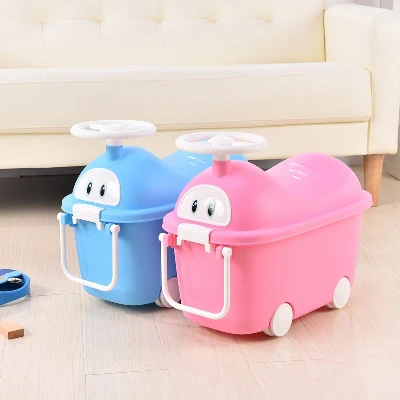
3. Both fun and educational design
Bright colors and cute patterns of storage buckets can attract children's attention and stimulate their interest in use. Some products are also designed with letters, numbers or animal patterns, you can store toys at the same time, simple cognitive education, edueduation, enhance children's interest in learning.
4. Easy opening, closing and handling
Considering the child's strength and ability to operate, it is important to choose a design that is easy to open and close. With a handle or light structure, it can be easily carried by children, encourage them to complete the toy storage work, enhance hands-on ability and independence.
5. Versatility and flexibility
Multi-functional toy storage buckets, such as those with movable wheels at the bottom, those with separation layers for easy classification, or those with foldable storage to save space, can better adapt to different use scenarios and changes in needs, improving the flexibility and convenience of use.
6. Environmental protection and sustainability
With long-term environmental goals in mind, choose containers made of recyclable or durable materials to reduce your environmental impact. At the same time, buy products that can be adjusted as the child grows, such as switching from toy storage to books or clothing storage, to increase the life cycle of the product.
Choosing a suitable children's toy storage bucket is not only to solve the problem of misplacing toys, but also an effective way to cultivate children's good living habits and sense of responsibility. By carefully considering the above factors, parents can help children establish a sense of sorting and summarizing from an early age, laying a solid foundation for their growth.